Posts

Showing posts with the label Reading

Reading Notes: Dante's Inferno; Part B
Image
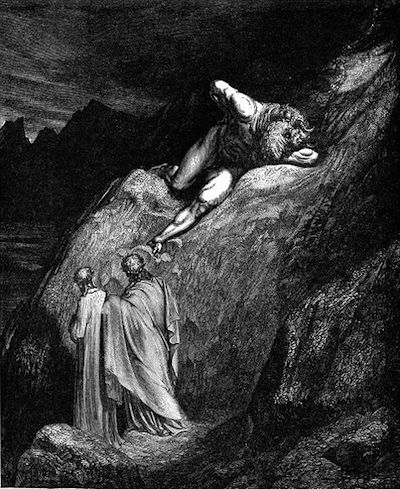
 Stories are derived from Dante's Divine Comedy, by Tony Kline The Minotaur and the Centaurs With the introduction, it connects to the story of the Minotaur and Theseus, which was the one who slain him and sent him to the Underworld Virgil mentioned his doom and the hero that done the deed to the Minotaur, which made the Minotaur very upset, which was a sign for Dante to descend further into the Underworld There didn't need to be an additional story that was added for the Minotaur, which made a special appearance laying on the top of a gully, but that's all There were a group of centaurs seen after the descent into the 7th circle, each of them armed and racing one after the other like they would on the Earth above When questioned, Virgil said that he would only answer to Chiron, which by further research was the son of the Titan Cronus Why does this make him important? Why do they seek only him? The one that was speaking to him happened to be Nessus, but how does Virgil kno...
Reading Notes: Dante's Inferno; Part A

Image
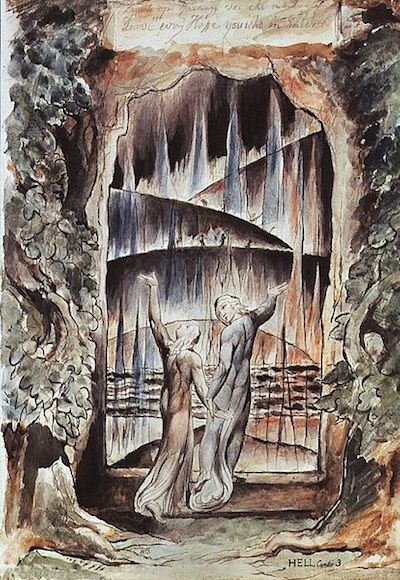
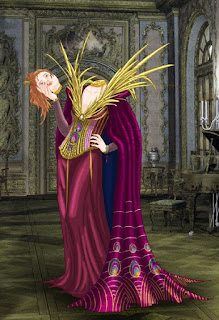
 Stories below are derived from Dante's Divine Comedy, by Tony Kline Dante and Virgil Very good introduction, the author is either talking to himself or directly to the reader. He tells of how lost and scared he was when entering the "impenetrable" woods, creating a personal note to the reader about how fearful he was Doesn't say too much, but definitely instilled a mood for the reader to start with the rest of the story Included a character called Divine Love Will this character be introduced later? Or was this just a general idea that the readers should know about? A manifestation of a feeling or emotion as a tangible character? When Dante met Virgil, Virgil introduced himself in a very odd way. He included many names of his lineage as well as who was associated with him in the past It also seemed that Dante knew who Virgil was, and also regarded him as his "master" VIRGIL IS HIS GUIDE THROUGH HELL?? At this point, it makes a lot more sense about who Dante...

Reading Notes: Russian Folktales; Part B

Image
 Stories derived from Russian Fairy Tales by W. R. S. Ralston The Headless Princess The king has a daughter who was an "enchantress" Usually, I've never read of royalty having any powers at all. Does the King also have powers? If not, why only the princess? The story is odd in terms of the message that it was trying to convey. For the most part, I couldn't figure out if the enchantress was supposed to be the protagonist or the antagonist because it was the priest's son that was peeping. I like how for ritualistic reasons, there are various details .. such as the number of days and the things the characters had to do to prevent from being taken away How did the old woman already know that the Princess was a witch from the start? (The Headless Princess. Source: RTOO )

Reading Notes: Russian Folktales, Part A

Image
Stories derived from Russian Fairy Tales by W. R. S. Ralston  Russia: The Dead Mother There is mentioned a certain village but did not specifically mention the name of the village  This can add to the anonymous atmosphere of the story, which creates a good introduction to the rest of the story Mentioned terminology that was specific to the region of the origin of the story In this case, it was the "moujik" which directly refers to a Russian serf -- basically an unfree peasant of Russia This could categorize as a horror story, something that could invoke terror in the readers Mentions the dead mother next to the cradle of the baby, which was something that the reader did not expect because the story started with the dead mother dying after childbirth! Maybe there's an all-encompassing theme to the rest of the story about the relationship between the baby and the mother, which in this case, can expand passed the limited time on Earth (Mother and Her Child. Source: Fairy Tal...

Reading Notes: Celtic Fairy Tales, Part A

Image
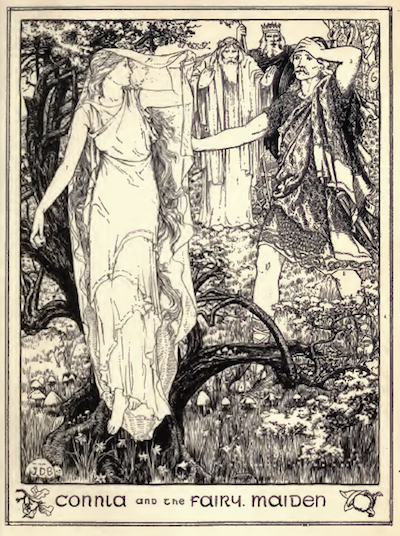
 Stories are derived from Celtic Fairy Tales by Joseph Jacobs  Connla and the Fairy Maiden Dialogue form stories between characters are very old-fashioned, parallel with the location/origin of the story For example: "Whence comest thou, maiden" Dialogue is also written in poetic form. This can be used for dramatic effect for the introduction of the character as well as the backstory Inclusion of magic in the story, but power is not directly shown but described Druids Member of high-ranking class in Celtic cultures, sometimes as religious leaders, or also legal authorities Priests, teachers, judges (The Fairy Maiden. Source: J. Batten )

Reading Notes: Beowulf; Part B

Image
 Stories source: The Story of Beowulf by Strafford Riggs Grendel Attacks For the most part, there was a heavy emphasis on the description of the setting, especially the darkness, the trees, the fog, and the wind  This really set up for the introduction of Grendel, which would be the antagonist that Beowulf would have to fight against "The fog parted evenly, and in the wide path is made through the night, a Shadow loomed gigantic in all that was left of moonlight" In terms of the Grendel, the author first characterized it as the "Shadow" Of course, the author already knew what the creature was, but I think the usage of this name was for the readers to see from Beowulf's point of view Also, it could be for a dramatic effect that would set up for the introduction of Grendel Everything that happened within this story was of little to no action, except for the end. However, the author did a great job of vividly describing the setting and expanding on the environment ...

Reading Notes: Beowulf; Part A

Image
Stories reference below were from  The Story of Beowulf by Strafford Riggs King Hygelac of Geatsland  Started off the story with a common introductory sentence, "Once upon a time, ... " Is this too overused? Tacky? Why do so many fairy tales and accompanying myths start off with this introduction? At the beginning of the story, before the characters were introduced, the author illustrated the setting of the story -- the monsters that resided in the oceans, the beasts that were in the forests For many of them, the author included ghastly details -- something to intrigue the reader into continuing with the story There was also a lot of discussion about the cultures of the lands and their surrounding lands as well. About how they were warring constantly At first, I thought this story wasn't as fantastical as it was made out to be. When I came upon the fact that there were monsters was where the story got a lot more interesting for me and my mind was filled with the possibili...

Reading Notes: British North America; Part B

Image
 Coyote's Gifts -- Myths and Legends of British North America, by K. Judson Usage of ambiguous character names, such as the "Old One" adds on to the dramatic effects of the character described as well as to the character describing it. Usually, in instances like these, these names signify the importance of this character and foreshadow the appearance again sometime later in the storyline. Or maybe even a backstory? The narrator speaks in a third-person point of view of him/herself, using no "I", but strictly "Coyote" Maybe for clarification? Could this be just an aspect of the culture of storytelling and mythology in this certain region? All other characters in the story are described in such ways, no usage of "he" or "she" or any related terminology All locations were clearly named Adds on to the realness of the story and how it is applied to reality I think that using these names, especially to those who have been to these locatio...

Reading Notes: Alaska; Part A

Image
The Raven's Myth: Raven's Creation | Source: Myth and Legends of Alaska by Katharine Berry Judson One of my favorite aspects of the story was the incorporation of the "Creator" component, which in this case, was the Raven. The Raven also could be in human and animal form, easily transforming between the two whenever needed Here, humans are present in the main character of the story, which was just "Man" and he would be one of the first and the Raven did not know where he came from Alike many of the creation stories in various mythological legends, humans are created from clay, alongside animals Repetitive dialogue to show emphasis of the interaction between the Raven and Man, the human that the Raven created Upon further research, the Raven represents a number of spiritual importance in the culture of the Pacific Northwest According to Spirits of the West Coast Art Gallery , the Raven symbolizes creation, transformation, knowledge, curiosity, and the unknown...

Reading Notes: Congo; Part A

Image
How the Wives Restored Their Husband to Life . Story source:  Notes on the Folklore of the Fjort  by Richard Edward Dennett. I enjoyed the inclusion of three different powers for the three different wives, sort of like a niche/role that they must work with together to fulfill the goal of finding and reviving the husband This can be something that I can incorporate into my story regarding groups of people, with each having a different power. Each one of these powers would be important in one or more aspects of the adventure themselves. When combined, it would surely be enough to fulfill the goals of the group (or not). The inclusion of such powers in connection with ordinary lives as described in the story is something that I would add in the story Can you believe that someone with the power to revive the dead is still struggling to eat on a day-to-day basis? There was also the inclusion of story logic, which the author proposes to create a theme/lesson that was to be inferred ...

Reading Notes: Ancient Egypt; Part B

Image
All stories below were received from Egyptian Myth and Legend , by Donald Mackenzie  The Two Brothers: Part I Dialect is very hard to understand, sounds like something from ancient scripture. However, it is still readable.  Starts the story with the normal "there once was ..." just like many other ancient myths or short stories that were available during this time and forward. This can be something that I can incorporate into my stories I like how, out of the two brothers, one was said to be "imbued with the spirit of the gods" However, the other brother was not This indication can show the source of conflict as well the differences in character between the two characters. But why only one of the brothers? Bata, the one that was imbued with the spirit of the gods, is able to understand the tongue of the oxen and other animals This can be a magical aspect that is needed in many mythological stories/folktales. The Two Brothers: Part II Towards the end of Part I, there...

Reading Notes: Homer's Odyssey; Part B

Image
 Odyssey: Ghost of Erebus , Homer's Odyssey by Tony Kline For the most part, the style of writing is dramatic, being somewhat consisting of several run-ons. Perhaps write more as though you were writing as you are speaking? In particular, something that I liked most about this story was the inclusion of prayers to the gods. We all know that in ancient Greek times, especially in epics, the relationship between gods and mortals is something that is prevalently mentioned. Here, the author mentioned the main characters' prayers to Persephone and Hades, which were the 'rulers' of the underworld. This statement here says that the gods play an all-around important role in the daily livelihoods of humans and their wishes, as we can see in the curse of Odysseus during the previous chapters. Odyssey: The Ghosts of Elpenor and Teiresias Perhaps the most intriguing part about this story was the inclusion of ghosts. Normally creatures and monsters that are not fully human would appe...

Reading Notes: Homer's Odyssey; Part A

Image
  The Land of the Cyclopes , by Tony Kline I like this introduction of the creatures that served as the main antagonists of the story Sets the scene for the savagery of these monsters and how they came to be, including the description of them being "lawless" and "rely on the immortal gods" For the introduction, the author did not dive in straight to the main plot of the story, only imaginative descriptions of these creatures  This serves to create an aroma of suspense that is associated with these creatures and the dangers they will pose to the main antagonist of the story Not only for the creatures, but the author also used the introduction to show the setting of the story as well There were also inclusions of the main backstory regarding the gods that rule the realms of this story, which in this case was the reference to Zeus and his connection to the Nymphs as well as the Cyclopes. Prisoner of the Cyclopes , by Tony Kline Each of the character introductions follo...

Week 3 Reading: Homer's Iliad; Part B

Image
Reading notes adapted from  Homer's Iliad , by Alfred J. Church The Rousing of Achilles Usage of many descriptive adjectives and verbs. This can be very useful in immersing the reader into the story Instances of grammatically incorrect sentence structures, however very effective when read aloud! Also, in terms of sentence structures, many of them are non-direct or passive, which is contrastive from what is required in essays, etc. The verbiage used was very much like the olden times, and also very exaggerated "O Hector, do you not dare ..." Spoke as though you are watching a play about the past The story portrayed the main hero, Achilles, as a character that is known widely in the world of the story and his infamy leads to fear among people who have never even seen him This usage of background fame can be used for characters that do not need a detailed backstory before the story starts. The character's already known throughout the lore itself The Slaying of Hector Eve...

Week 3 Reading Notes: Homer's Iliad, Part A

Image
 Reading notes adapted from Homer's Iliad , by Alfred J. Church Iliad: How the War with Troy Began The story starts with traditional "once upon a time, there once ..." that generally begins with most folktales Revolves around royalty and their interconnected relations Usually involves some form of love or arranged marriage All characters described as some form of title or relationship to another form of royalty Ex: Nestor, the oldest man in the world Ex: Diomed, son of Tydeus The Quarrel Interference with the gods as a way to give one of the sides an advantage Here, the priest of Apollo prayed to Apollo, and the god went and destroyed Agamemnon's horses, mules, and the rest of the army An instance of a clear moral dilemma between Agamemnon and the rest of his chiefs Human fault in Agamemnon's greed and desire to gain Also, another divine intervention when Achilles was about to pull out his sword to spar with Agamemnon, but the goddess Athena stopped him and convin...

Reading Notes: Week 2 Anthology

Image
 Reading from Heavenly Beings: Susanoo and Orochi  by  E. W. Champney and F. Champney Usage of multiple descriptive adjectives, verbs, and gerunds that is more complex and unnatural when compared to today's average usage Usage of words that is reminiscent of fairy tales, such as "fair maiden," and "ye." There were also numerous accounts of conversation that is divided into different paragraphs  I really liked the usage of mythical monsters/creatures in this story, such as the Koshi, especially in the world of gods and goddesses Conversation and interactions between these divine beings and mortals is also something I think I would like to add in my stories. Involves the role of a powerful protagonist as well as a clever and descriptive way of defeating his/her enemy. (Susanoo Killing the Orochi. Source: Toyohara Chikanobu )

Week 2 Reading Overview

Image
Choose from CLASSICAL and/or BIBLICAL units for Weeks 3 and 4. Week 3: Homer's Iliad  Week 4: Homer's Odyssey Choose from MIDDLE EASTERN and/or INDIAN units for Weeks 5 and 6. Week 5: Ancient Egypt Week 6: Bengali Choose from ASIAN and/or AFRICAN units for Weeks 7 and 9. [Week 8 is review week.] Week 7: Japanese Mythology Week 9: Congo Choose from NATIVE AMERICAN units for Weeks 10 and 11. Week 10: Alaska Week 11: British North America Choose from BRITISH and/or CELTIC units for Weeks 12 and 13. Week 12: Beowolf Week 13: Celtic Tales Choose from EUROPEAN units for Weeks 14 and 15. Week 14: Rusian Week 15: Dante's Inferno (Statue of Anubis. Source: Unsplash ) In terms of these specific units within the class, I'm especially interested in Japanese and Russian mythology as there are so many famous references in today's media. Another section that I'm excited about is Ancient Egypt mythology!